On the evening of May 6, Wuhan Textile University hosted a special activity called “Face-to-Face with the Party Secretary” for the Green Manufacturing faculty at Jianquan Hall, Jianquan Conference Center. Prof. Xu Weilin—Party Secretary of WTU and Academician of the Chinese Academy of Engineering—delivered a keynote lecture titled “Clothing as Continuity: Bridging Historical Heritage and Technological Frontiers in Textiles”, addressing nearly 700 teachers and students. Speaking both as a distinguished scholar and an alumnus, Academician Xu traced the evolution of textile science from its cultural roots in ancient China to its cutting-edge applications in national strategic sectors—including aerospace, biomedical engineering, and green manufacturing—framing the discussion within broader themes of cultural confidence, scientific self-reliance, and youth responsibility.
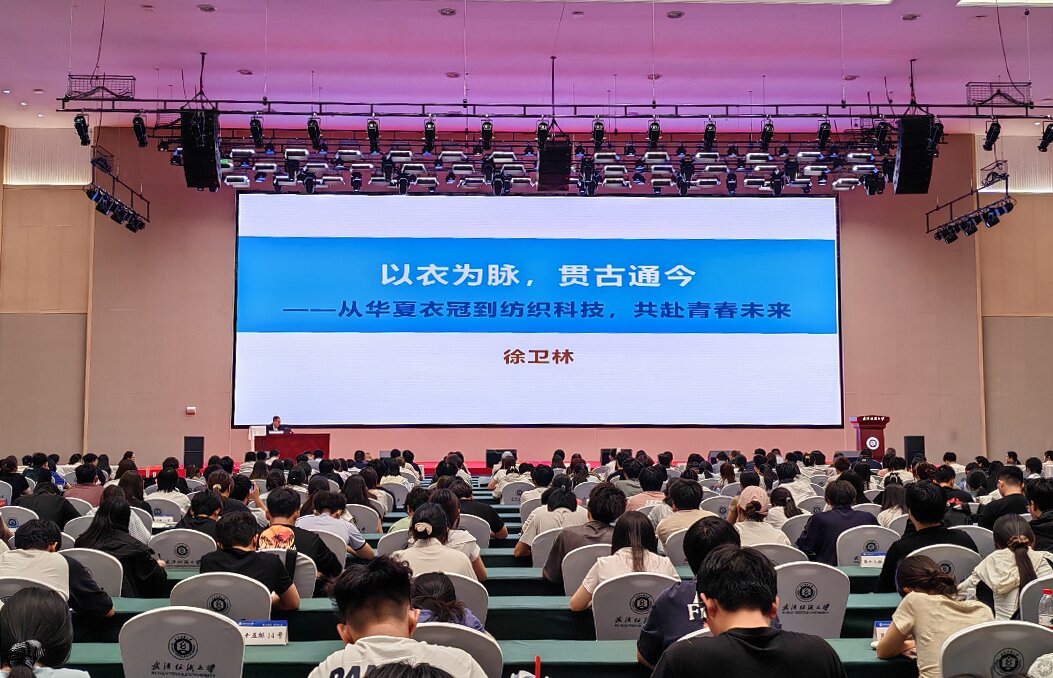
The lecture comprised three integrated thematic pillars:
Attire as Cultural Archive: Academician Xu illustrated how dress codes and textile aesthetics across dynasties—from the Tang and Song eras to the Ming and Qing—serve not merely as sartorial expressions but as historical indices of sociopolitical stability, technological capacity, and aesthetic philosophy. Drawing upon literary references in works by Li Bai and Su Shi, he demonstrated how shifts in garment design and material usage reflect transformations in governance, economy, and intellectual life.

Textiles as National Capacity Indicator: Introducing an analytical framework linking textile advancement to macro-level national strength, Academician Xu presented empirical correlations between dynastic prosperity (measured via agricultural output, metallurgical development, trade volume, and institutional resilience) and concurrent innovations in spinning, weaving, dyeing, and fiber processing. He underscored that textile industry vitality has historically paralleled—and often catalyzed—broader socioeconomic progress.
Textiles as Strategic Enabler: Highlighting Wuhan Textile University’s pivotal role in national space missions, Academician Xu detailed the interdisciplinary R&D efforts behind the ultra-stable, radiation-resistant national flag deployed on the lunar surface during the Chang’e-5 and Chang’e-6 missions. He emphasized that modern textiles have transcended traditional domains to become mission-critical components in aerospace thermal control systems, deployable space structures, regenerative medical scaffolds, and next-generation environmental filtration platforms. Aligning this trajectory with Hubei Province’s initiative to cultivate a CNY 50-billion advanced textile and apparel cluster, he urged students to anchor their academic pursuits in national priorities—contributing not only to industrial upgrading but also to technological sovereignty.
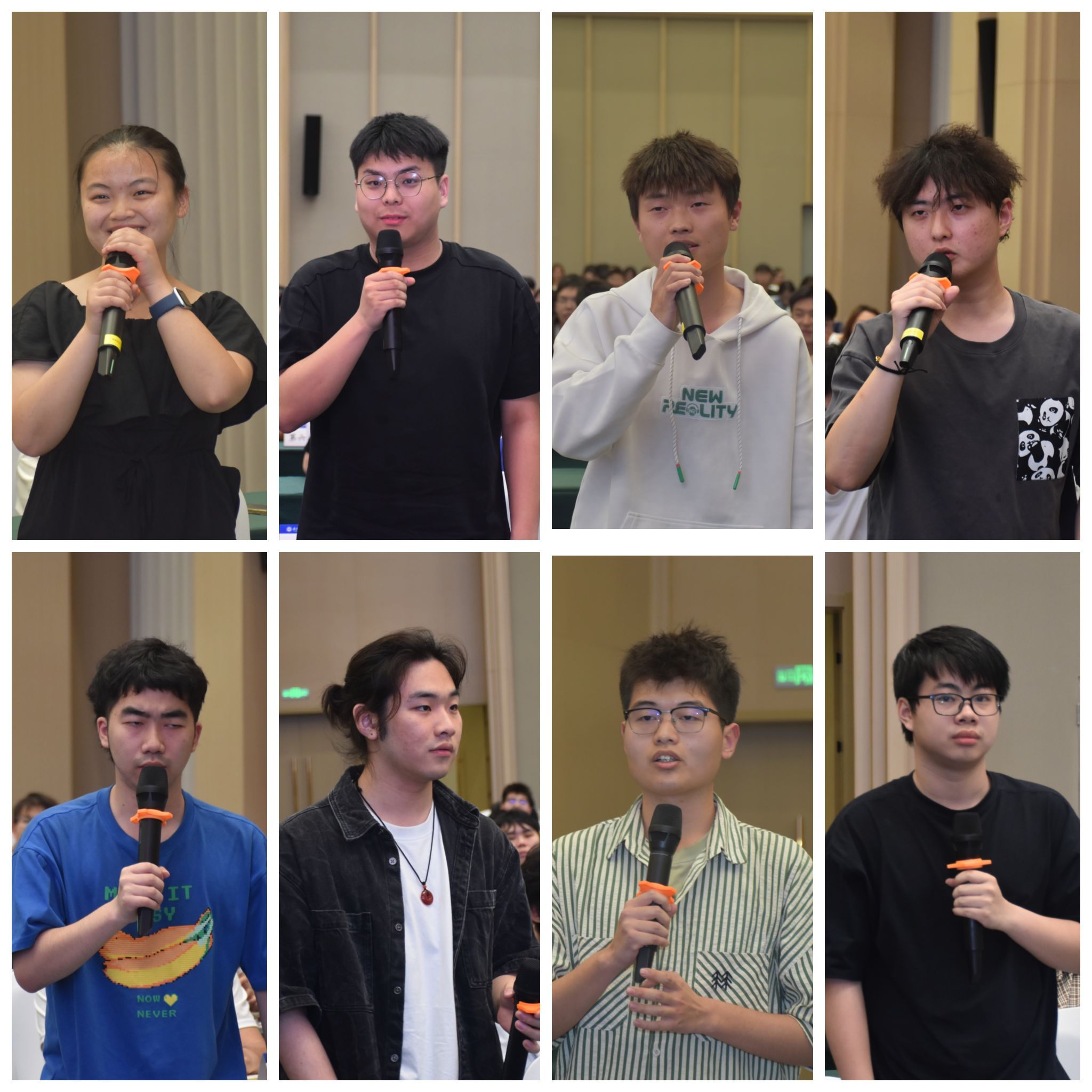
In the interactive segment, Academician Xu responded thoughtfully to student-submitted inquiries collected via written “Wish Cards” and live digital submissions. Questions spanned career pathway design, research methodology training, academic resilience, and strategies for navigating competitive professional landscapes. His responses combined empirical insight with mentorship-oriented candor—reiterating that “no sector is inherently obsolete; only outdated paradigms constrain innovation.” He advocated cultivating three foundational competencies: sustained intellectual curiosity (“interest-driven learning”), disciplined self-directed inquiry (“autonomous research literacy”), and adaptive perseverance (“resilience grounded in purpose”).
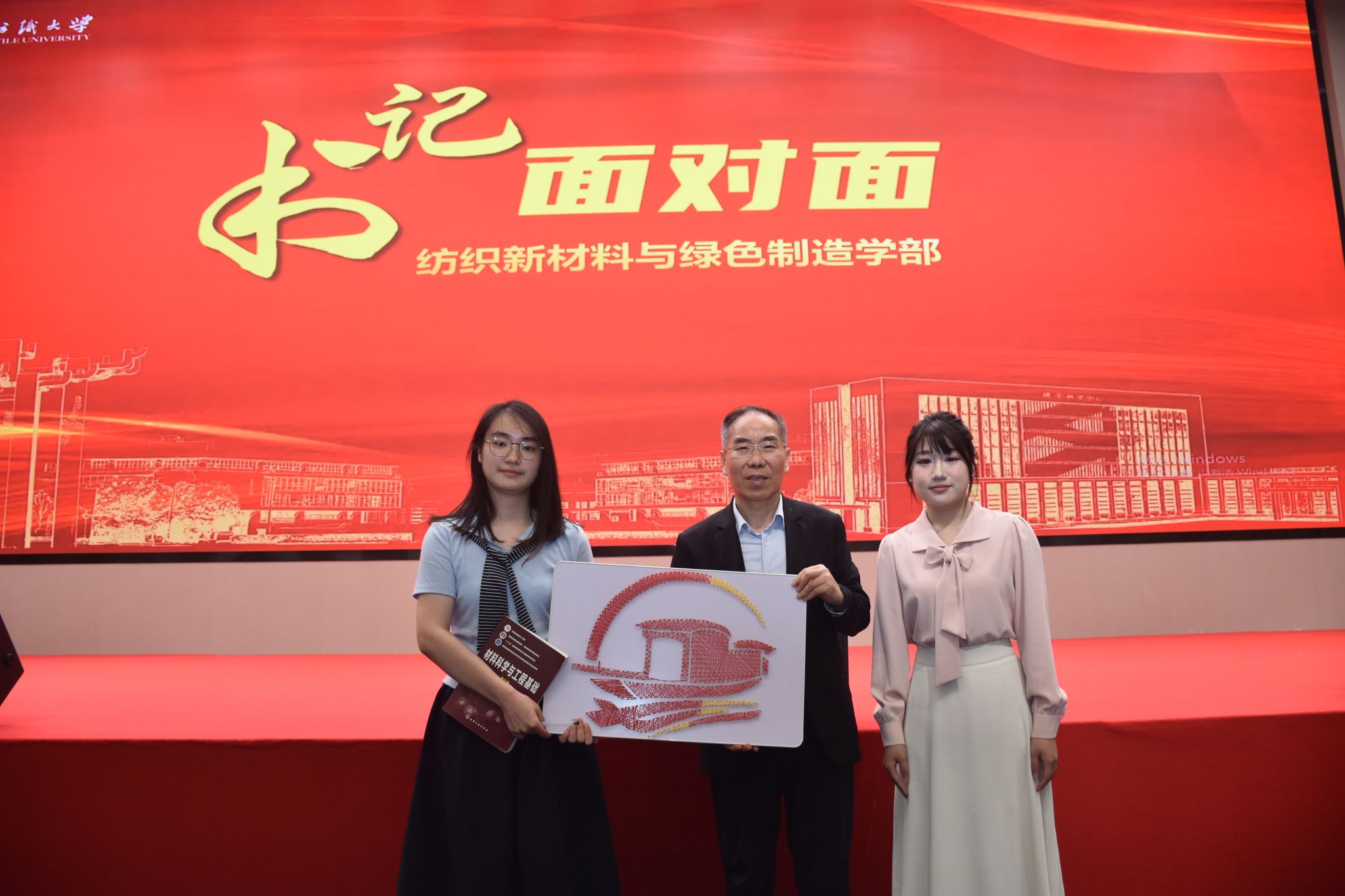
Academician Xu presented each student with a personally inscribed message: “Sweat on the body, light in the eyes, dreams in the heart.” This tripartite motto encapsulated his call for integrative praxis—emphasizing embodied effort, visionary clarity, and purposeful aspiration. He challenged Green Manufacturing students to situate their growth within the dual imperatives of Wuhan Textile University’s “Double First-Class” development and China’s science and technology self-reliance—transforming the age-old ethos of “clothing the world” into a forward-looking commitment: to engineer sustainable materials, pioneer intelligent manufacturing systems, and advance textile science as a pillar of global technological leadership.