At the invitation of the School of Microelectronics, Academician and Vice President of the Austrian Academy of Sciences, Professor Ulrike Diebold, visited Wuhan Textile University for academic exchanges on April 22nd and 23rd. President Fu Xin met with Professor Ulrike Diebold, and the staff of the School of Microelectronics, personnel dept., and International Office participated in the exchange activities.
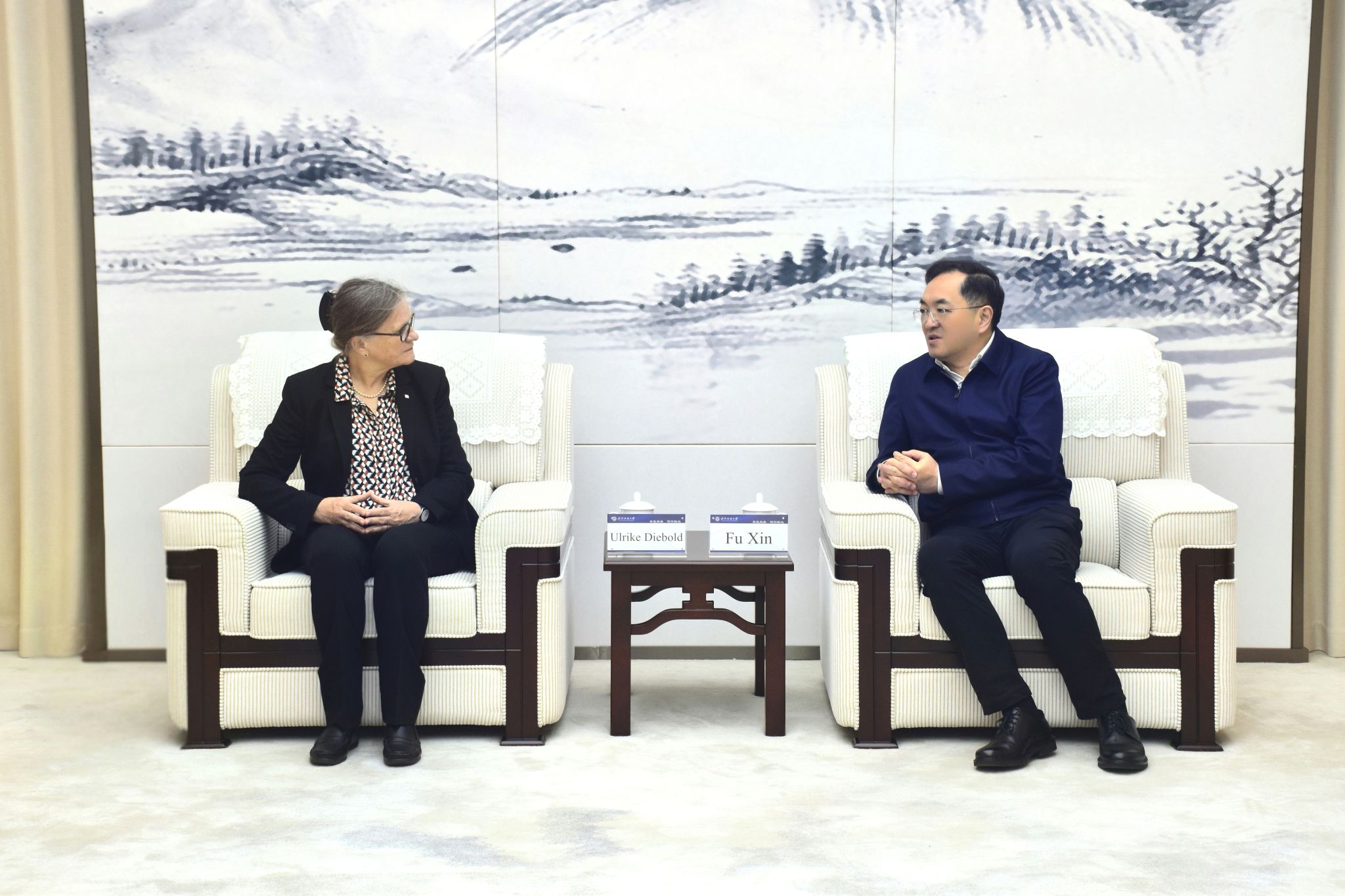
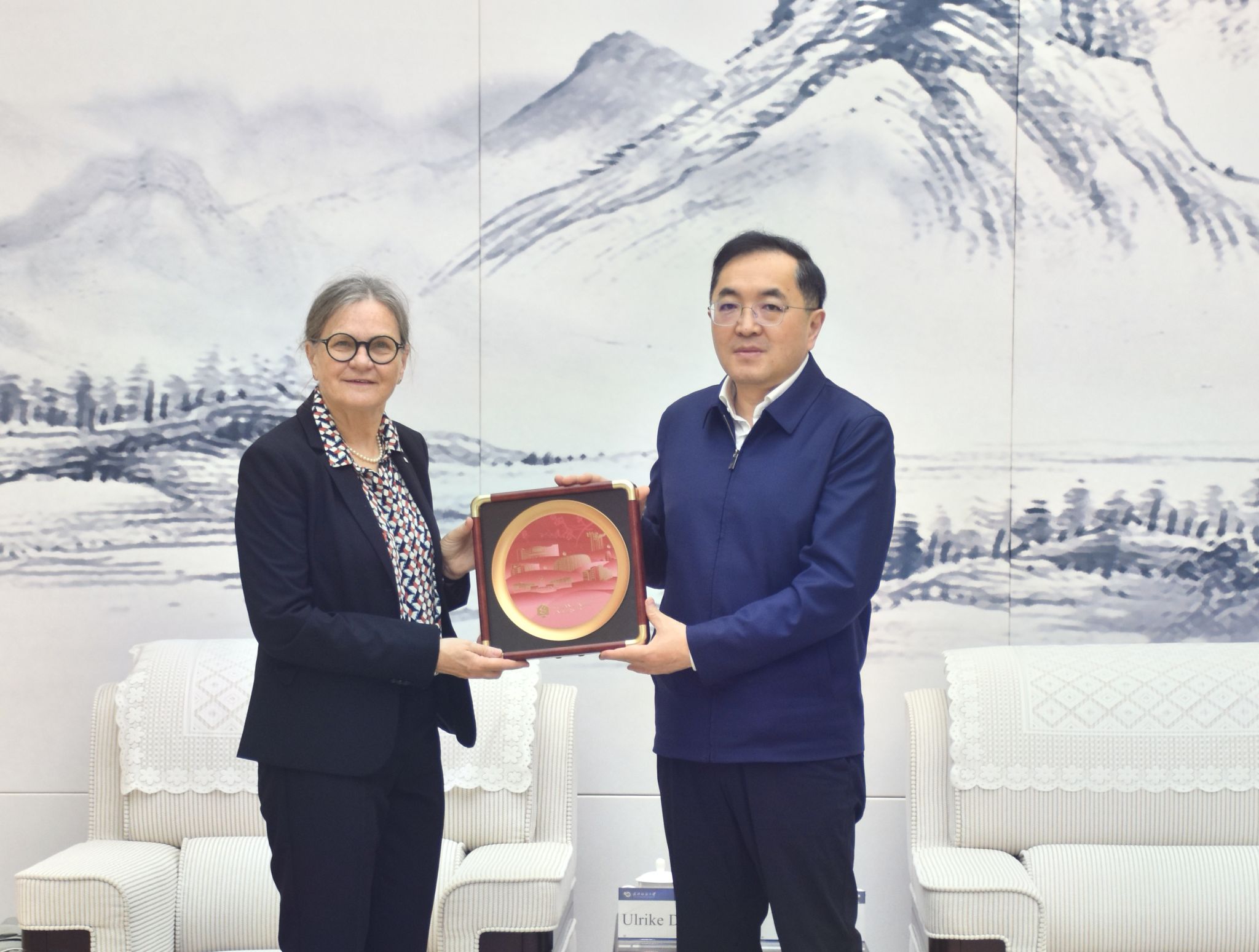
On the morning of April 22nd, President Fu Xin met with Professor Ulrike Diebold in the Jianquan Auditorium. President Fu Xin extended a warm welcome to Professor Ulrike Diebold's visit, introduced the basic situation of WTU, including its scale of education, discipline construction, and international exchanges and cooperation, and emphasized the advantages and characteristics of the disciplines related to materials science and electronic information. He expressed that Professor Ulrike Diebold's research in the fields of functional oxide materials interface science and advanced semiconductor processes and devices is highly consistent with the discipline direction of the School of Microelectronics of Wuhan Textile University. He hoped that Professor Ulrike Diebold would visit the university frequently and conduct in-depth cooperation with the School of Microelectronics. The university will fully support the related cooperation projects. Professor Ulrike Diebold thanked Wuhan Textile University for the warm reception, highly praised the rapid development of the university's electronic information discipline and the School of Microelectronics, and expressed that she would actively carry out academic exchanges and discuss cooperation projects in related research fields. President Fu Xin presented Professor Ulrike Diebold with a special souvenir of WTU.
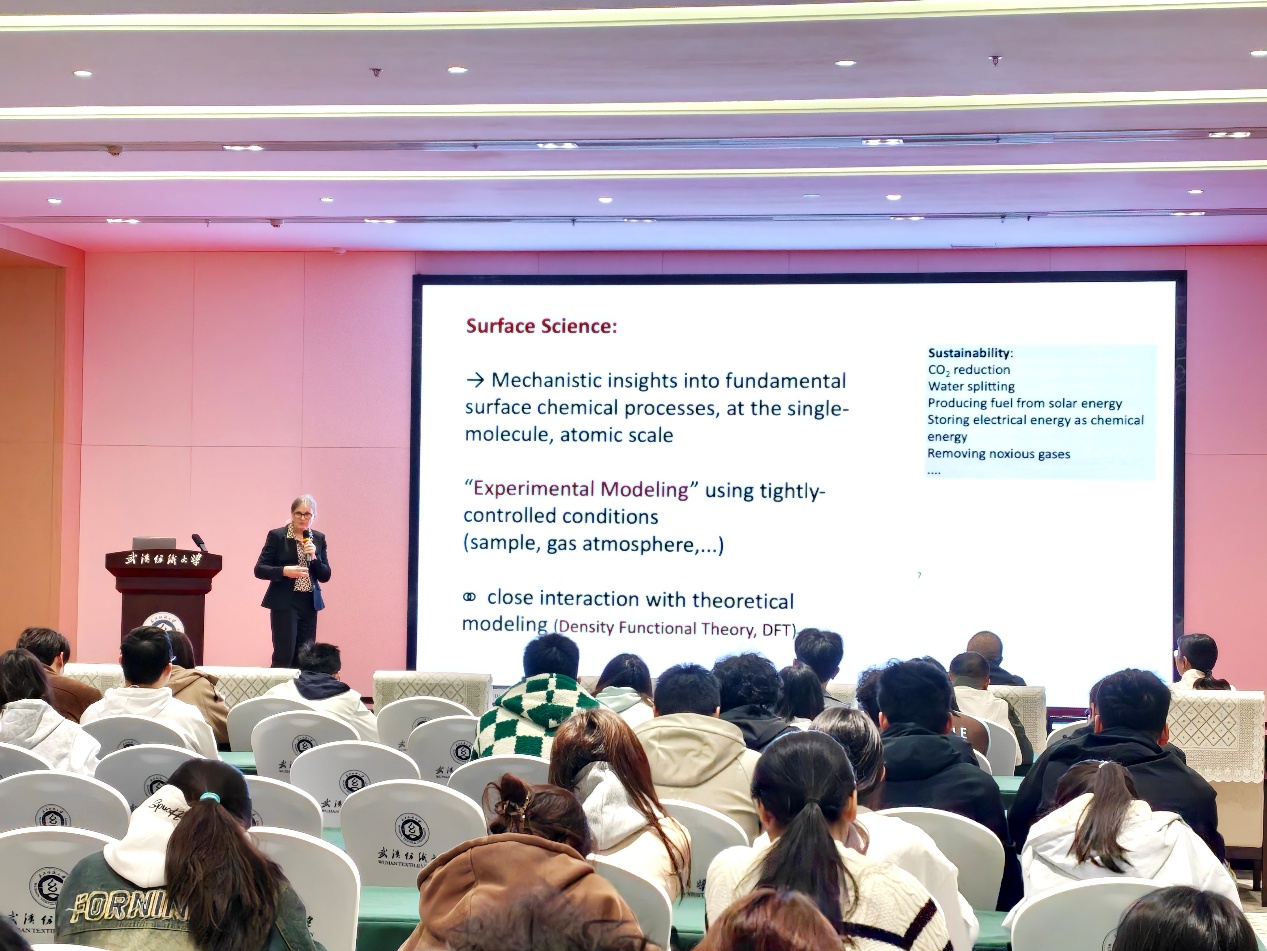
Professor Ulrike Diebold was a guest at the 958th Sunshine Forum of the university and delivered a deep sharing on the theme of "Atomically-Resolved Oxide Surfaces: Where Theory and Experiments Meet". She systematically reviewed the research system of her team's long-term in-depth research in the fields of atomic-level precise characterization and regulation of complex oxide surfaces and local charge behavior of surface defects, and focused on demonstrating the innovative research paradigm of deeply integrating in-situ experimental characterization of high-end surface science with first-principles calculations. She expounded on the breakthroughs and future technological application prospects in this direction. Professor Ulrike Diebold's lecture aroused great interest among teachers and students, and the lecture concluded successfully in an active discussion and warm applause.
In the afternoon of the same day, Professor Ulrike Diebold visited the Textile Science and Technology Museum and the laboratory of the Hubei Engineering Research Center for Wide Bandgap Semiconductor Materials and Devices, and conducted academic guidance and exchanges. Professor He Yunbin, the vice dean of the School of Microelectronics, and the young doctors and postgraduate students of the school had in-depth exchanges with Professor Ulrike Diebold, and focused on introducing the research progress of high-quality gallium oxide film growth, its interface defect regulation, and optoelectronic device applications. Professor Ulrike Diebold highly evaluated the research work of the team and provided guiding suggestions on key scientific issues and technical routes.
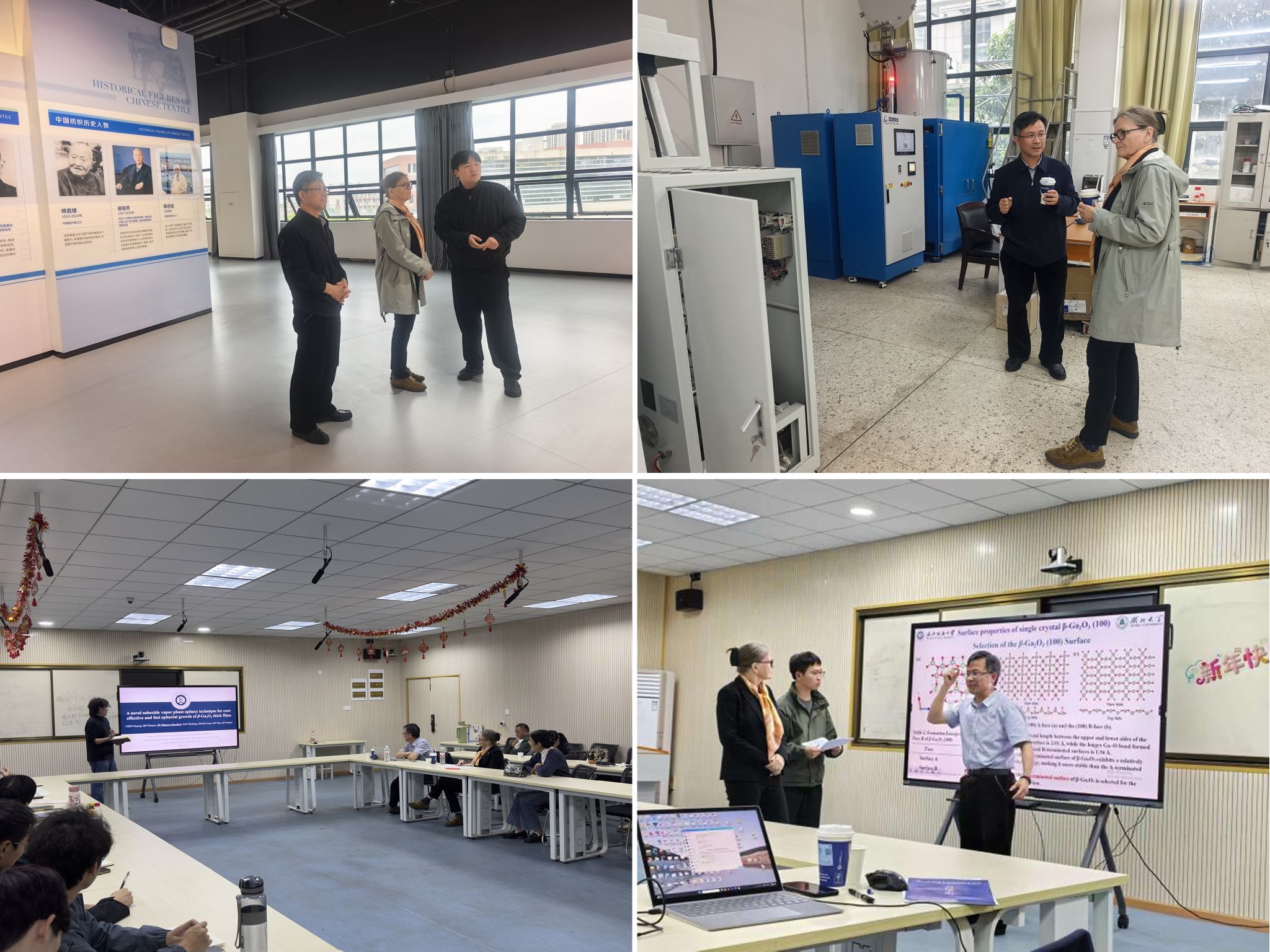
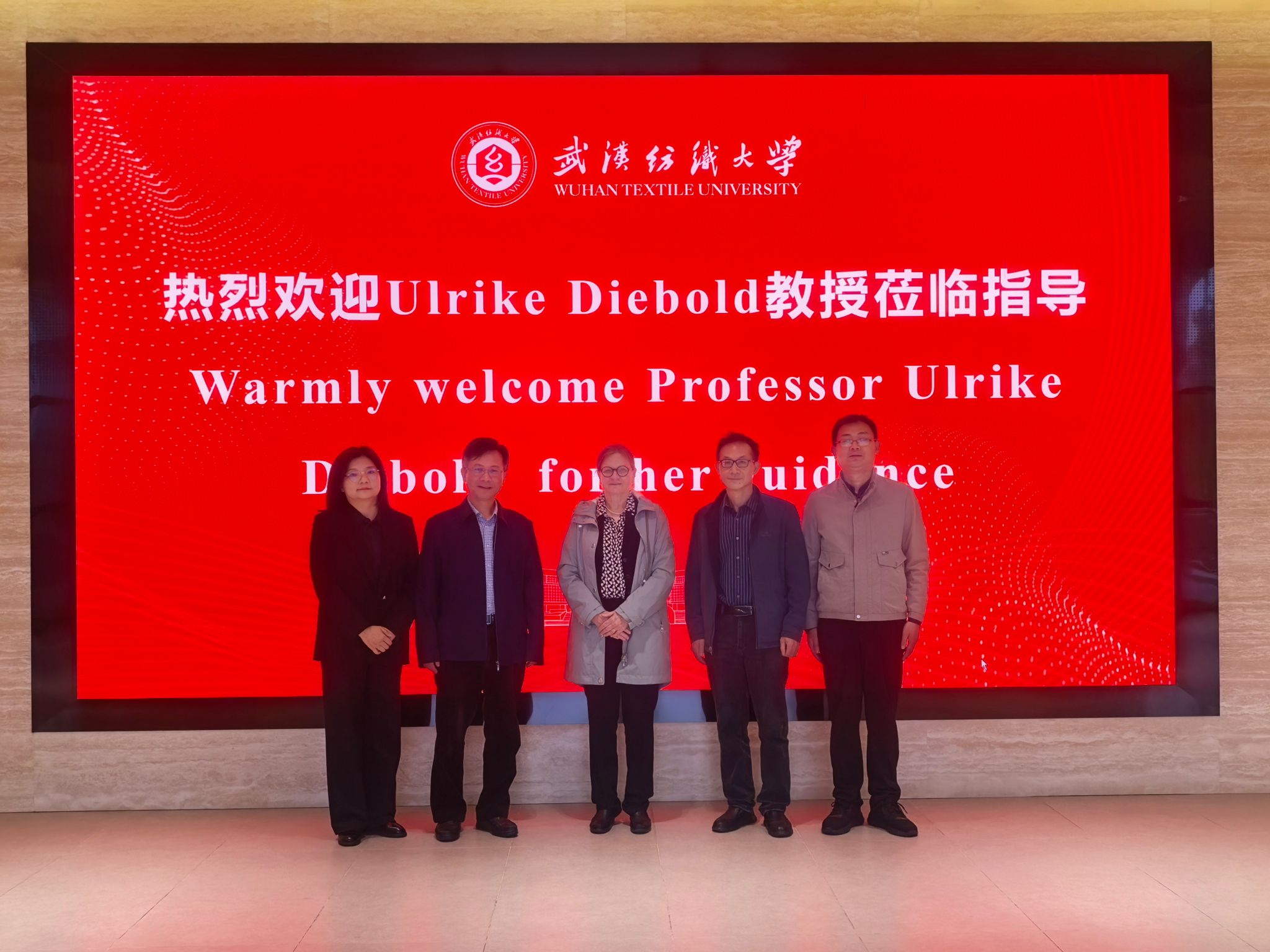
In addition, the School of Microelectronics also carried out international people-to-people exchange activities and had discussions on cooperation with Professor Ulrike Diebold.