Recently, Fu Xin, the president of Wuhan Textile University, was appointed as a member of the chief expert group of the Smart Link and attended the first Tuanhualin Roundtable Conference of 2026, where he delivered a keynote speech on "Promoting Industry-University-Research Collaboration Innovation with Enterprises as the Main Body". In his speech, Fu Xin shared that WTU adheres to the "strengthening the university through scientific research" strategy, relying on the disciplinary advantages of "textile as the characteristic, science and engineering as the main body, and humanities, arts, and economics and management as the two wings", and follows the principle of "taking enterprise demands as the orientation, technological breakthroughs as the core, and achievement transformation as the goal" to explore and form a collaborative model of "bridging through job rotation, team breakthroughs, and government-enterprise-university linkage". This has precisely met the local industrial demands and achieved the collaborative innovation results of technological breakthroughs, industrial implementation, and project cooperation applications.
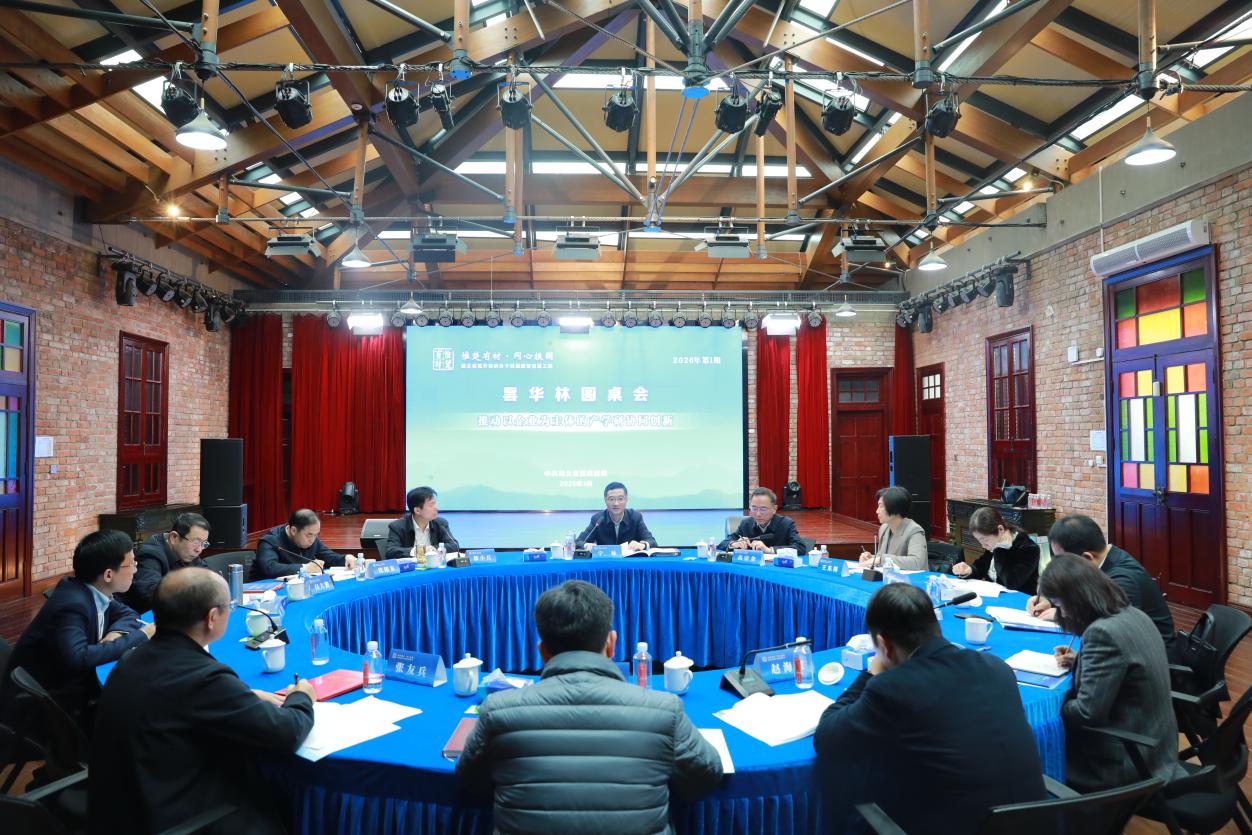
In response to the current bottlenecks and practical problems such as the imperfect collaborative innovation mechanism, the incomplete highlighting of the enterprise's leading position in innovation, insufficient investment in collaborative innovation, limited coverage of government subsidies, and the shortage of compound talents needed for collaborative innovation, Fu Xin put forward three suggestions: First, strengthen the leading position of enterprises and stimulate their internal innovation drive. Promote the joint research model of "enterprises posing questions and universities solving them" to enhance the enthusiasm and initiative of enterprises in participating in collaborative innovation. Second, improve the collaborative mechanism and build a long-term cooperation system. Promote the extension of laboratory achievements to the pilot stage and industrialization stage to break through the "last mile" of achievement transformation. Third, strengthen policy guarantees and optimize the collaborative innovation environment. Improve the evaluation system for university researchers, increase incentives for achievement transformation and enterprise technical services, smooth the channels for talent flow, and implement the model of mutual employment and sharing of talents between universities and enterprises to cultivate compound collaborative innovation talents.