At the invitation of the School of Microelectronics, Professor Eunjoo Jang—Academician of the National Academy of Engineering of Korea and Professor at Sungkyunkwan University—and Dr. James (Jueng-Gil) Lee—National High-Level Foreign Expert and Deputy Chief Engineer of the R&D Center at TCL Group—visited the university from 26 to 29 March 2024 for a high-level academic exchange program. Their visit included keynote lectures, strategic discussions on research collaboration and talent development, and site visits to key research facilities. Academician Xu Weilin, Party Secretary of the university, and President Fu Xin met with the experts to affirm institutional commitment to international scientific cooperation. Representatives from the Party Committee’s Talent Work Office, the International Office, the Personnel Department, and the School of Microelectronics participated in structured bilateral dialogues focused on concrete pathways for sustained collaboration.
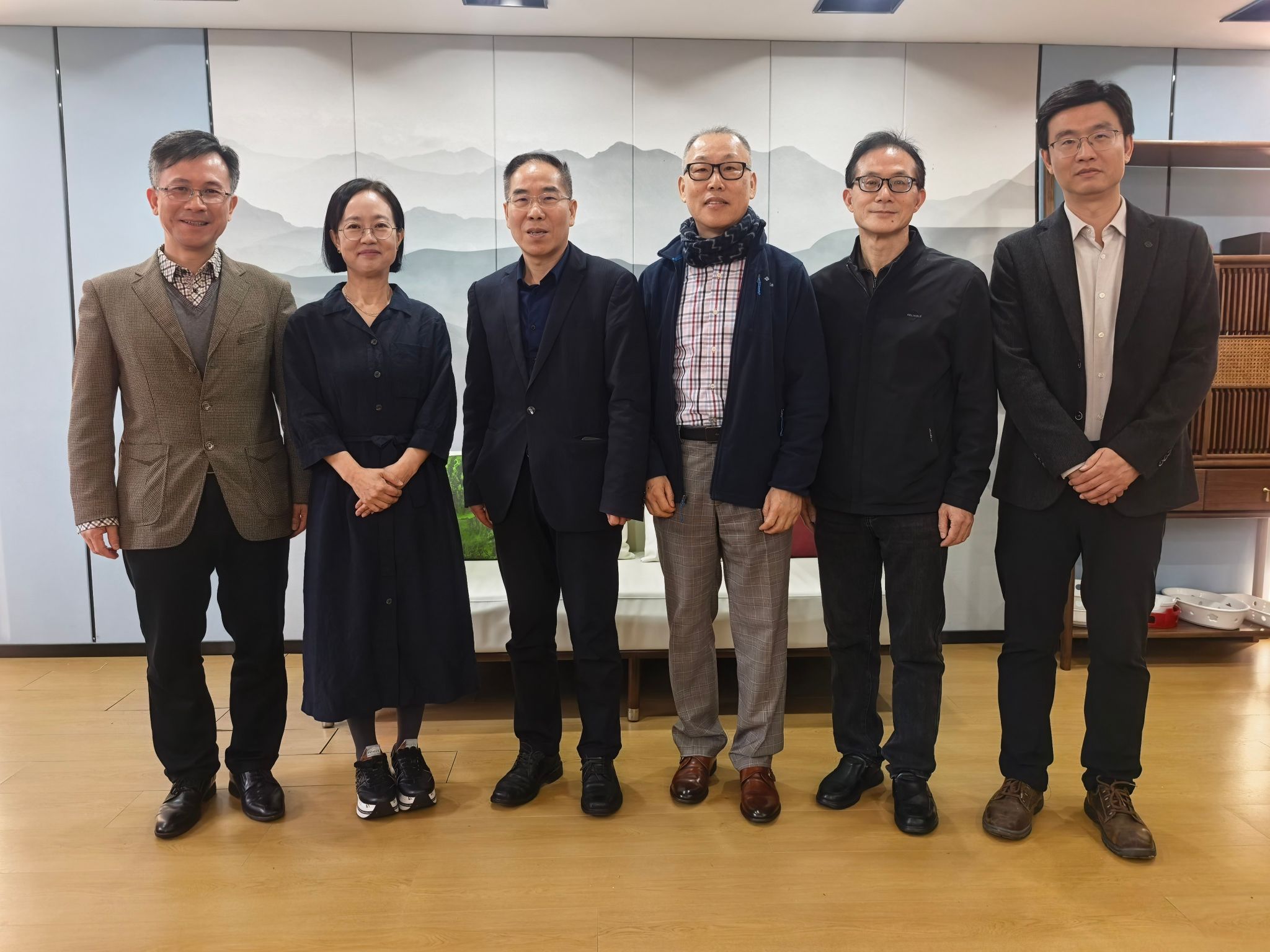
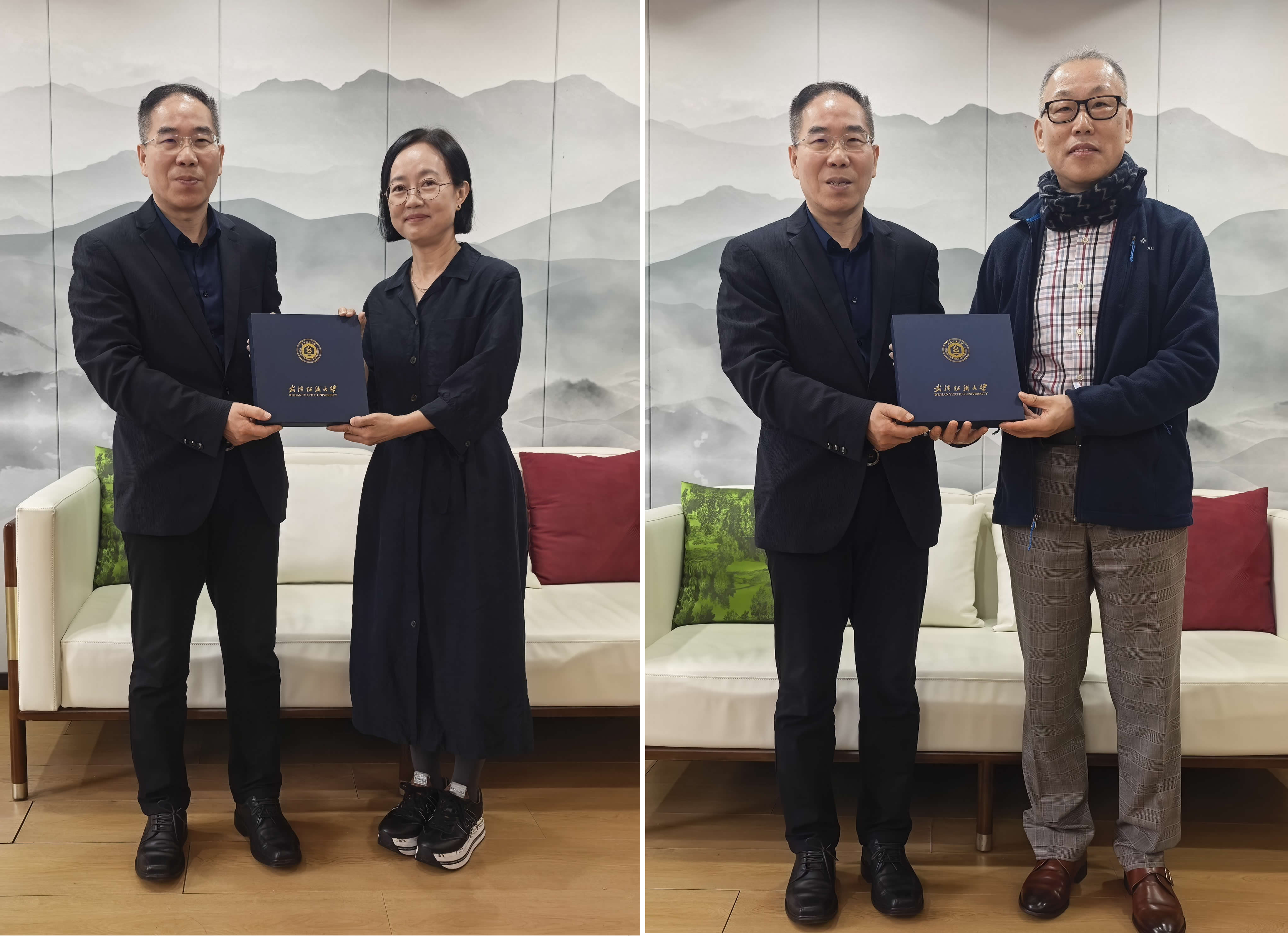
On 26 March, Academician Xu Weilin formally welcomed the delegation and delivered opening remarks highlighting the university’s distinctive strengths in interdisciplinary research, talent cultivation, and platform construction—including national key laboratories and state-level innovation centers. In substantive discussions, he emphasized synergies between the experts’ expertise in quantum materials and flexible optoelectronics and the university’s strategic priorities in microelectronics, photonics, and intelligent manufacturing. He underscored the university’s proactive efforts to foster an enabling ecosystem for international scholars—including streamlined administrative support, competitive research funding mechanisms, and integrated industry–academia–research initiatives—and expressed strong interest in co-establishing joint research teams, shared platforms, and dual-supervision doctoral programs to accelerate translational outcomes in optoelectronic technologies.
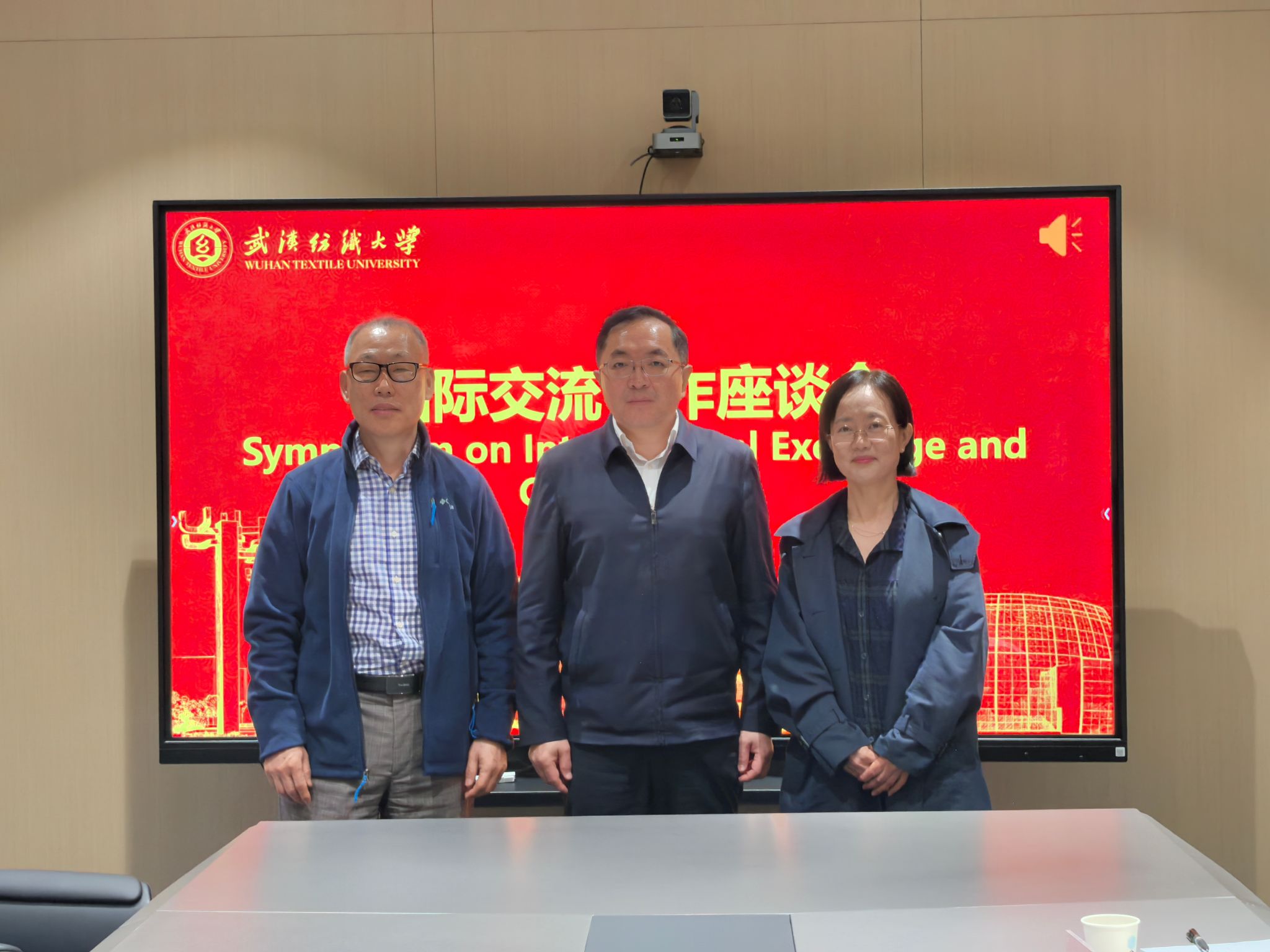
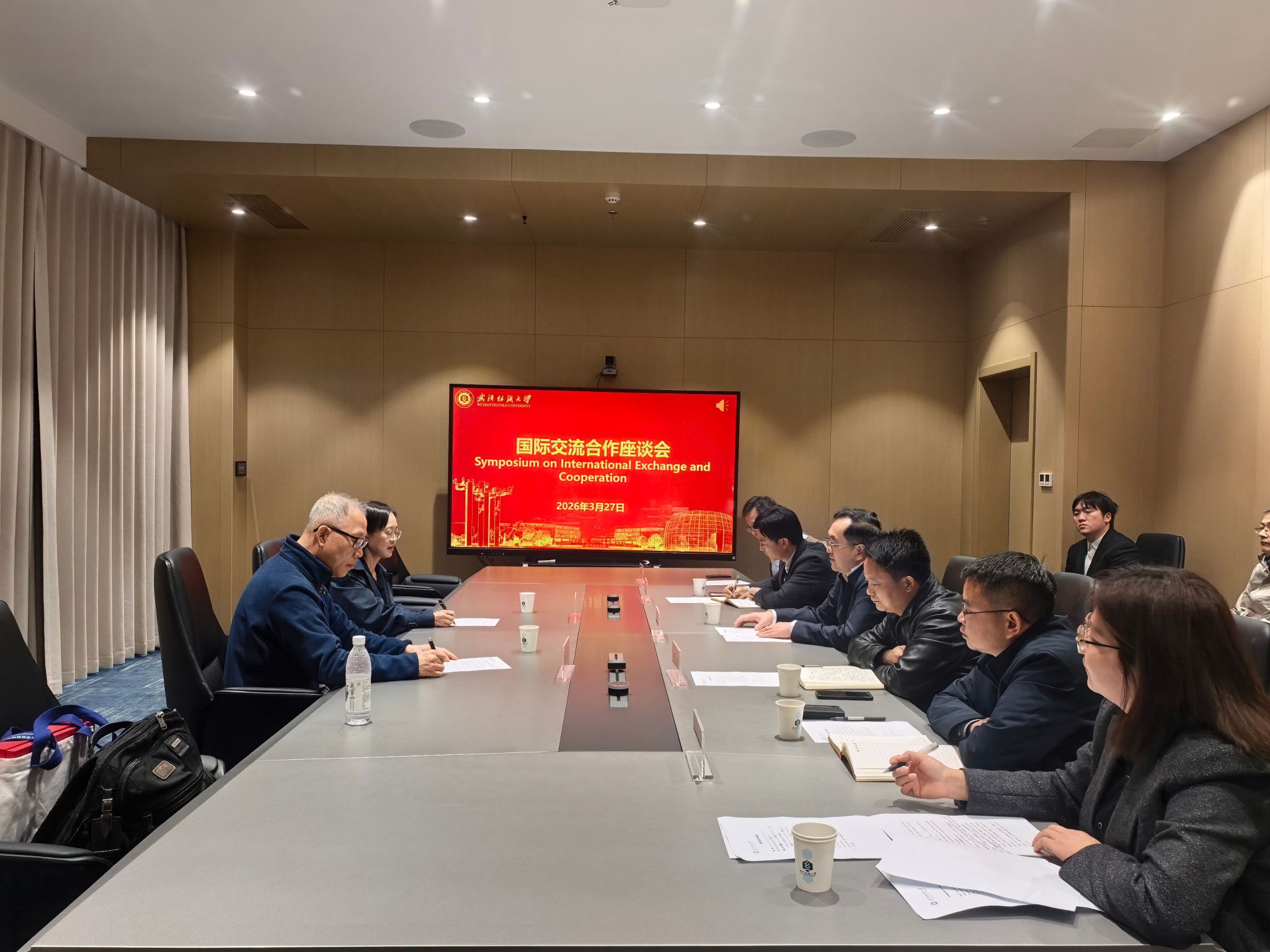
On 27 March, President Fu Xin hosted an International Cooperation Symposium, reaffirming the university’s open, inclusive, and forward-looking internationalization strategy. He outlined the institution’s historical evolution, current positioning within China’s “Double First-Class” initiative, and targeted expansion of partnerships with leading Korean universities and technology enterprises—particularly leveraging Wuhan’s status as a global hub for optoelectronic industries (“Optics Valley”). Drawing on regional industrial advantages and the university’s roadmap for microelectronics and advanced display technologies, he proposed priority areas for collaboration, including joint R&D projects, faculty exchange programs, and co-organized international conferences. The symposium concluded with detailed policy briefings by functional departments on recruitment frameworks, research infrastructure access, visa and relocation support, and long-term career development pathways for foreign experts.
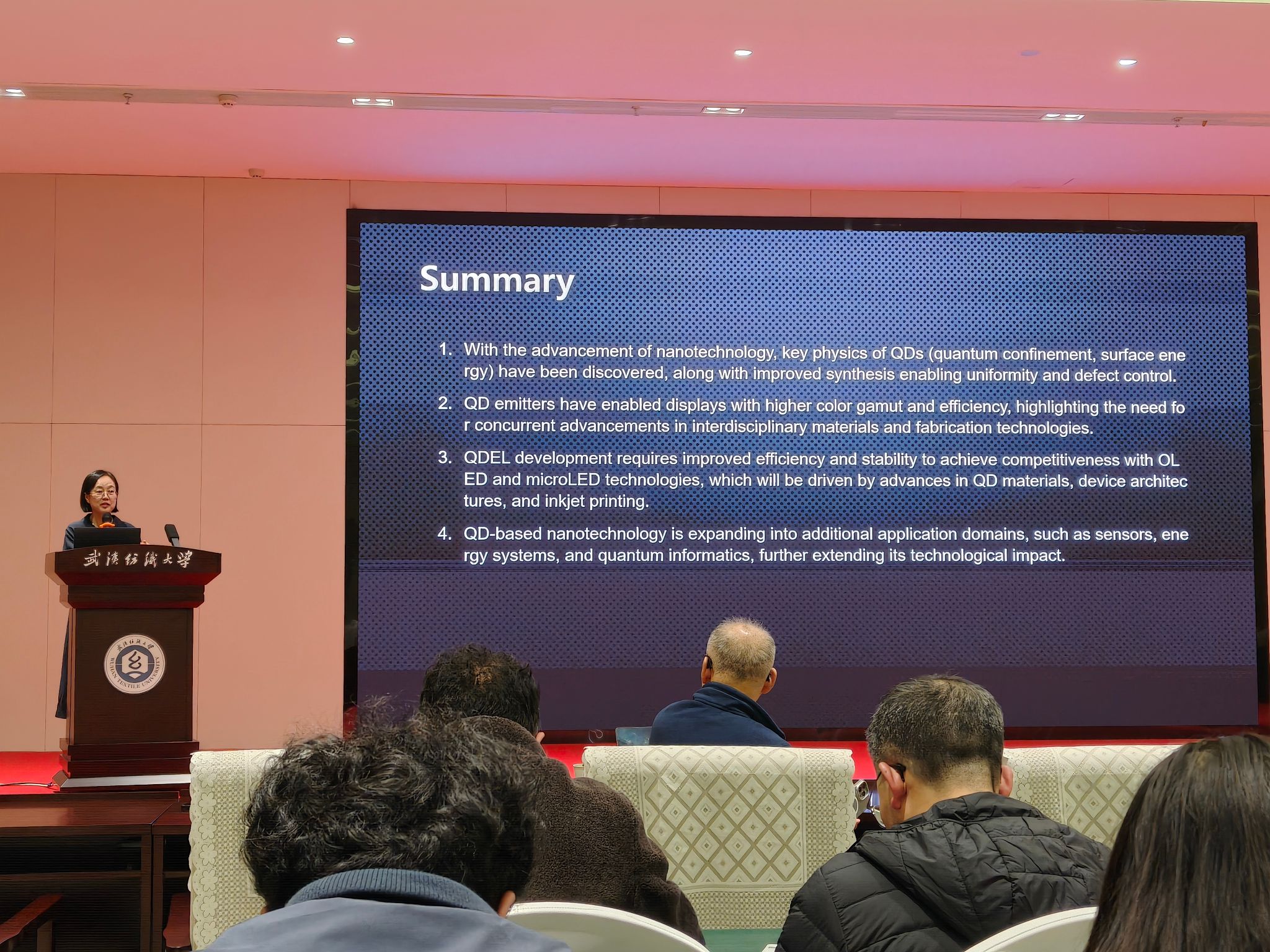
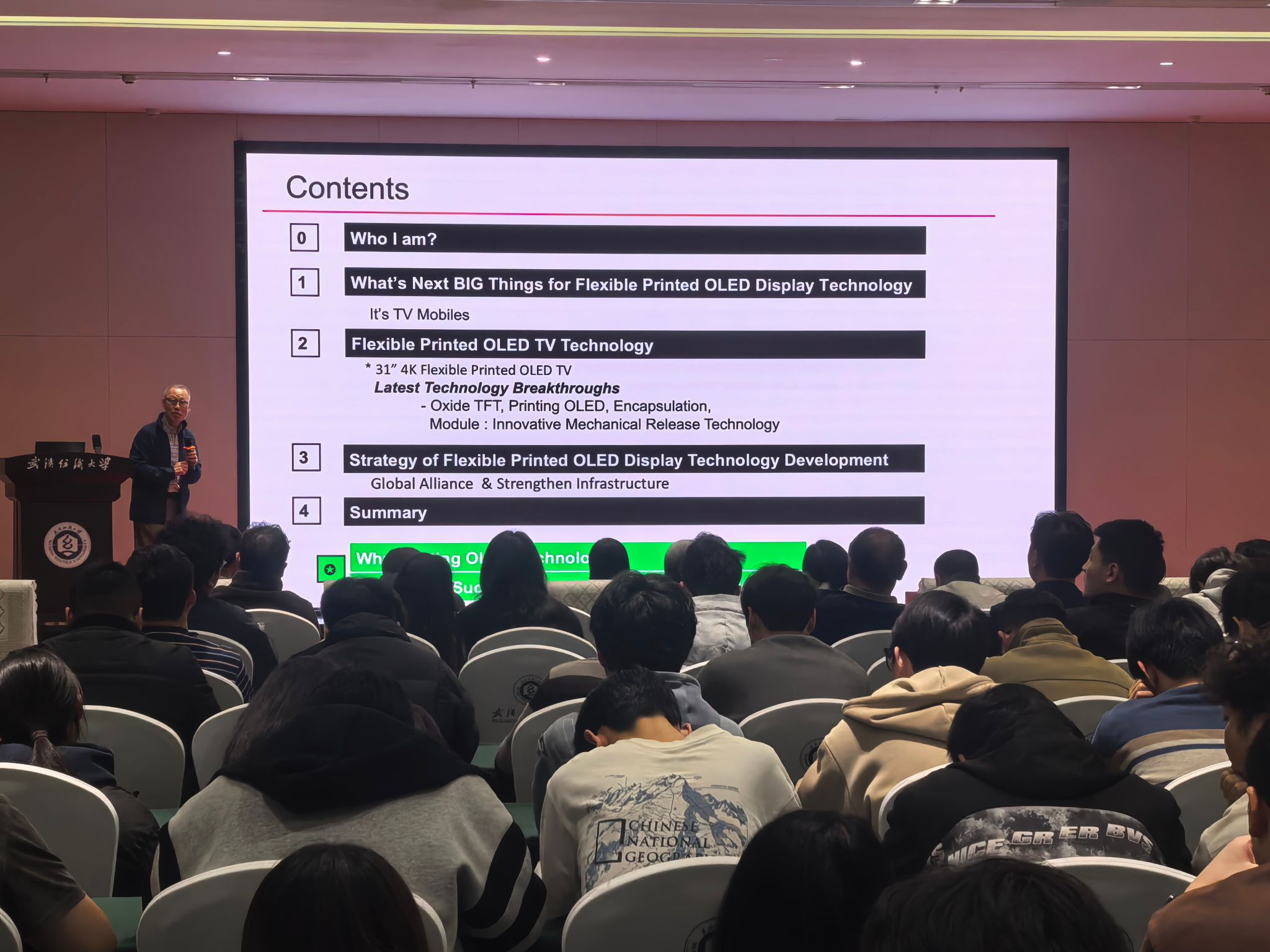
A specialized academic salon was jointly organized on the afternoon of 26 March by the Party Committee’s Talent Work Office, the National Key Laboratory of Textile New Materials and Advanced Processing, and the School of Microelectronics. Professor Jang presented “Perspectives on Quantum Dot Technology: Small Success & Big Impact”, offering a rigorous, historically grounded analysis tracing quantum dot innovation from fundamental photophysics to commercial deployment in next-generation displays—illustrating how nanoscale precision engineering has redefined global display supply chains. Dr. Lee delivered “Recent Breakthroughs in Flexible Printed OLED Display Technology”, synthesizing advances in solution-processable emissive layers, high-resolution printing techniques, and encapsulation strategies, while critically assessing scalability challenges and market-ready applications in foldable smartphones, wearable interfaces, and large-area ambient displays. Both lectures were distinguished by their integration of deep scientific insight with pragmatic industrial context, stimulating vigorous Q&A and follow-up discussions among faculty and graduate students.
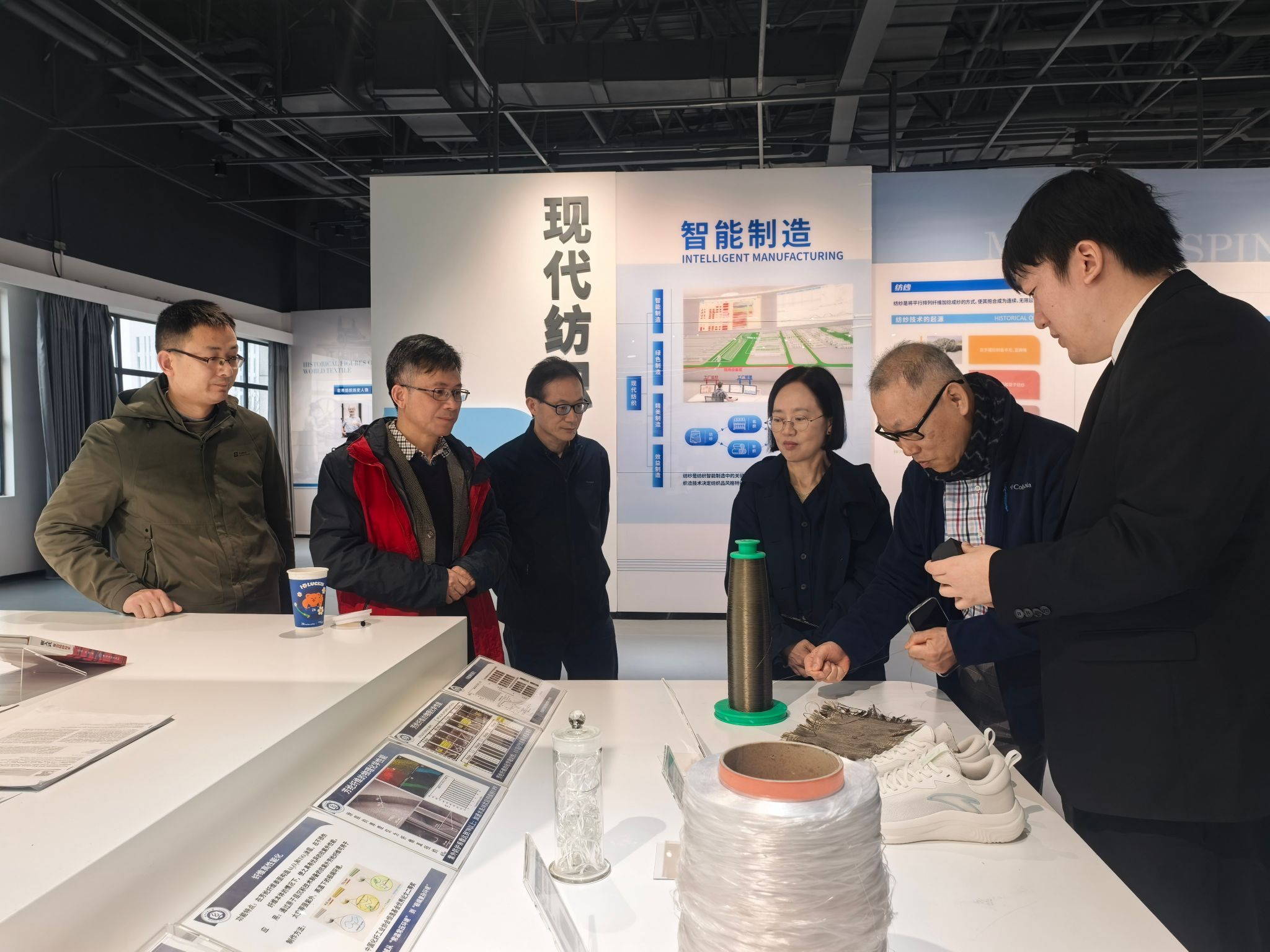
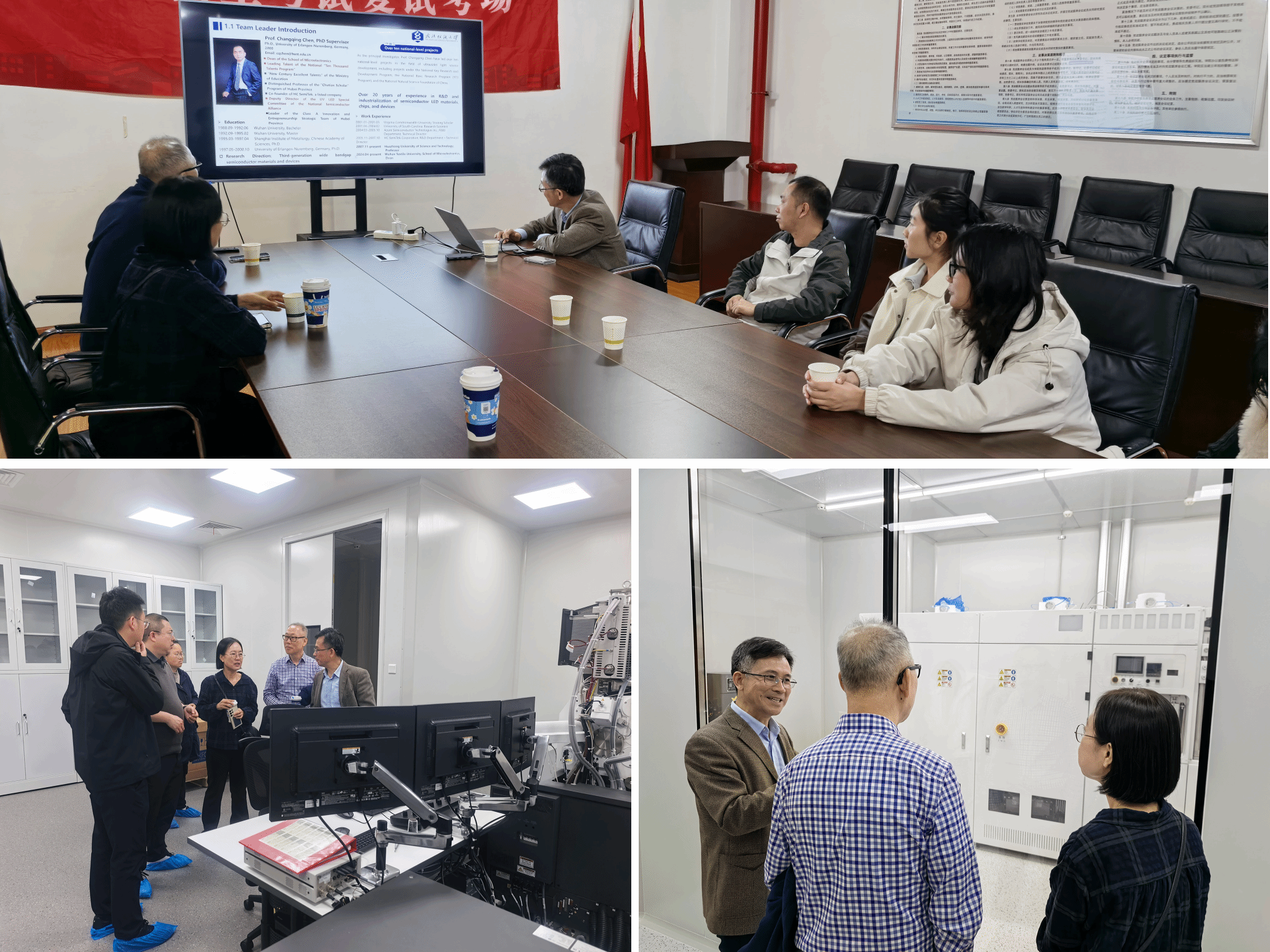
Throughout the visit, the experts toured the Textile Science and Technology Museum, the Central Analytical Testing Center, and state-of-the-art laboratories within the School of Microelectronics—gaining first-hand insight into the university’s unique convergence of traditional textile heritage and cutting-edge microelectronic research, its multidisciplinary infrastructure, and its vibrant research culture. Complementing technical engagements, the School of Microelectronics arranged cultural immersion activities—including dialogue sessions with young faculty and postdoctoral researchers—which facilitated mutual understanding, strengthened interpersonal ties, and enriched the bilateral exchange with dimensions of academic hospitality and cross-cultural appreciation.